The Ultimate Guide to Reselling Vintage Sports Cards: From Authentication to Profit

The allure of vintage sports cards transcends mere nostalgia; it represents a tangible piece of history, a passion for the game, and for savvy resellers, a golden opportunity for profit. The market for vintage sports cards – generally defined as cards produced prior to the 1980s – has seen remarkable growth and stability, offering a rich hunting ground for those willing to learn its intricacies. From iconic rookie cards of Hall of Famers to rare error variations, the potential for discovering a hidden gem is always present. This comprehensive guide will equip you with the knowledge and actionable strategies needed to navigate the exciting world of vintage sports card reselling, transforming your finds into lucrative sales.
The Thrill of the Find: Identifying Authentic & Valuable Vintage Sports Cards
Before you can even think about selling, you must first master the art of identification and authentication. The vintage card market is rife with counterfeits, reprints, and less valuable common cards, so knowing what you're looking at is paramount.
Understanding "Vintage" – What Era Are We Talking About?
While the definition can be subjective, "vintage" in sports card collecting typically refers to cards produced before 1980. This era encompasses legendary sets from manufacturers like Topps, Bowman, Fleer, and Goudey, featuring icons such as Mickey Mantle, Willie Mays, Babe Ruth, and Jackie Robinson. The further back you go (pre-war cards, 1930s-1940s), the rarer and often more valuable the cards become.
Key Authenticity Checks
Identifying genuine vintage cards requires a keen eye and familiarity with the period's printing techniques.
- Printing Quality & Card Stock: Vintage cards often have a distinct feel and print quality different from modern cards. Older cards typically used thicker, less glossy card stock. Examine the printing for dot matrix patterns, which are characteristic of the era. Modern fakes often have sharper, more precise printing or a different texture.
- Dimensions: While not always perfect, most vintage cards adhered to standard dimensions (e.g., 2.5" x 3.5" for Topps). Be wary of cards with noticeably different sizes, which could indicate trimming (a major red flag for value) or counterfeiting.
- Common Fakes & Reprints: Many popular vintage cards (like the T206 Honus Wagner or 1952 Topps Mickey Mantle) have been extensively faked or officially reprinted. Learn to distinguish these. Reprints often state "reprint" on the back, but some fakes are designed to deceive. Researching known characteristics of high-value cards is crucial.
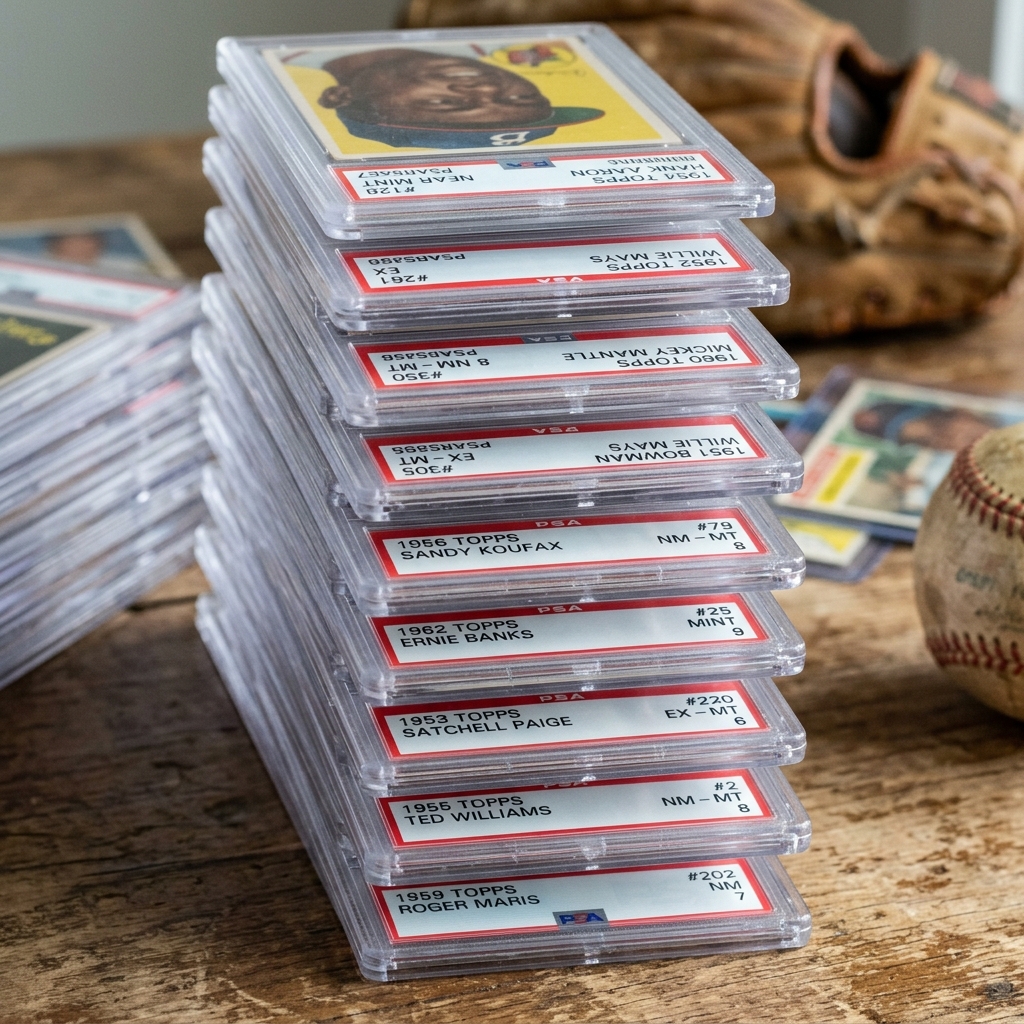
- Third-Party Grading (TPG): For high-value cards, authentication and grading by reputable services like Professional Sports Authenticator (PSA), Sportscard Guaranty Corporation (SGC), or Beckett Grading Services (BGS) is the gold standard. A slabbed card from one of these companies provides undeniable authenticity and a standardized condition grade, significantly enhancing its market value and buyer confidence. If you acquire a raw, ungraded high-value card, consider getting it graded.
Unearthing Valuable Variations & Error Cards
Beyond iconic players and sets, specific variations and errors can drastically increase a card's value.
- Rookie Cards (RCs): These are the cornerstone of sports card collecting. A player's true rookie card, particularly if they become a Hall of Famer, is almost always their most valuable card from a particular set. Learn to identify the actual rookie card for key players (sometimes players had cards in different sets before their widely recognized RC).
- Short Prints (SPs) & Variations: Manufacturers sometimes produced certain cards in lower quantities (short prints) or with subtle differences (variations). Examples include O-Pee-Chee vs. Topps issues (O-Pee-Chee cards from Canada can be rarer), or cards with different backgrounds, team names, or photo crops.
- Error Cards: These are production mistakes that escaped quality control and can be highly sought after. Examples include missing names, wrong backs, photo variations (e.g., player shown with wrong team), or printing anomalies. The 1969 Topps Mickey Mantle "White Letters" variation or the 1989 Fleer Billy Ripken "Fuck Face" card (though not truly vintage by some definitions, illustrates the point) are famous examples.
- Hall of Famers (HOFers): Cards featuring players enshrined in their respective sports' Hall of Fame command premium prices, especially their rookie cards and key issues throughout their careers.
- Early Issues of Iconic Brands: Cards from foundational sets like 1952 Topps, 1933 Goudey, or 1948 Bowman are inherently more valuable due to their age, historical significance, and the legends they feature.
The Condition Conundrum: Evaluating Your Vintage Sports Cards
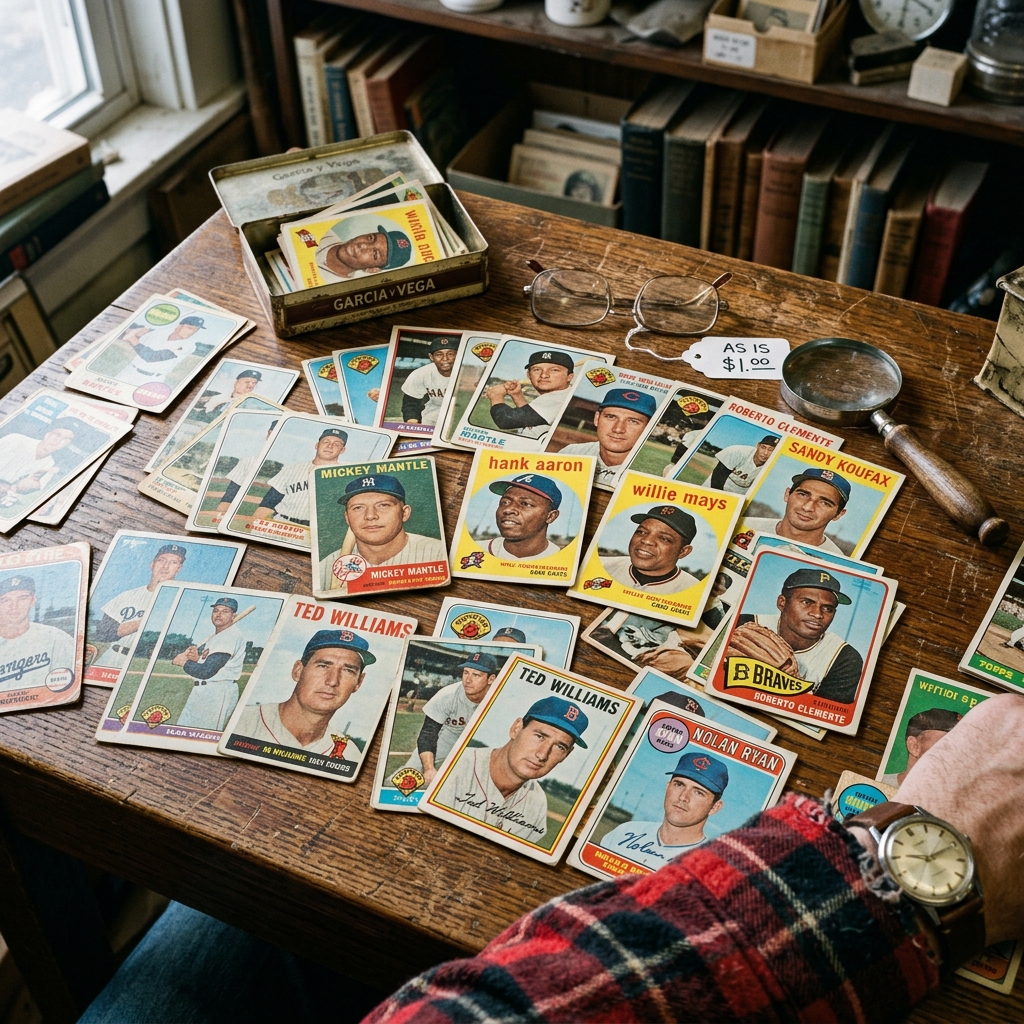
Condition is king in the sports card market, especially for vintage items. A slight crease or ding can mean the difference between hundreds or thousands of dollars in value. Understanding how to grade cards is crucial, even if you only intend to sell them raw.
The Four Pillars of Card Condition
Grading, whether professional or amateur, focuses on these four key areas:
- Corners: Examine all four corners. Are they sharp and pointed, or do they show varying degrees of rounding, fuzziness, or wear? Sharp corners indicate less handling and higher value.
- Edges: Look at the edges for chipping, dings, or whitening. Clean, unbroken edges are highly desirable.
- Surface: This is where many flaws manifest. Look for creases (even minor ones are detrimental), scratches, indentations, print defects (wax stains, ink smears, fisheyes), loss of gloss, or scuffing.
- Centering: This refers to how evenly the image is placed within the card's borders. Poor centering (e.g., a thick border on one side and a thin one on the other) significantly reduces value, even if the card is otherwise pristine.
Common Flaws to Watch For
Be meticulous in your inspection. Use a magnifying glass and good lighting.
- Creases: The absolute value killer. A visible crease, even a minor one, will drastically reduce a card's grade and value. Even a slight bend that doesn't fully break the paper fiber can be considered a "wrinkle" or "crease."
- Pinholes, Staple Marks, Glue Residue: These indicate the card was once affixed somewhere, severely impacting its condition.
- Ink/Wax Stains: Old album pages or packaging can leave stains. These are usually permanent and detract heavily.
- Altering Evidence: Be vigilant for signs of card doctoring, such as trimming (cutting the edges to improve centering or sharpen corners), recoloring (using markers to hide white edges), or surface restoration. These practices are unethical and will render a card worthless to serious collectors if discovered.
- Surface Scuffing/Loss of Gloss: Over time, handling can cause the surface to lose its original sheen or develop scuffs. This affects the eye appeal and grade.
DIY Preservation & Protection
For vintage cards, "cleaning" is generally discouraged as it can devalue the card by altering its original state. Instead, focus on preservation.
- Dusting: Gently dust off surface debris with a very soft, dry microfiber cloth. Avoid any liquids or chemicals.
- Protection: Immediately place any valuable raw card into a penny sleeve (a soft, thin plastic sleeve) to protect the surface, then slide it into a rigid toploader (a thicker plastic holder). For high-value cards, a "team bag" can then seal the toploader, preventing dust and moisture. This protects the card during storage, transport, and listing photos. 📦 Buy Penny Sleeves and Toploaders on Amazon Here
- Storage: Store cards in a cool, dry, dark place, away from direct sunlight, extreme temperatures, and humidity, which can cause warping, fading, or mold. Acid-free storage boxes are ideal.
Mastering the Market: Pricing Your Vintage Sports Cards for Profit
Accurate pricing is the linchpin of successful reselling. Overprice, and your card sits; underprice, and you leave money on the table.
The Gold Standard: eBay Sold Comps
The most reliable way to price a vintage sports card is by examining recent "sold listings" on eBay. This reflects what buyers are actually paying right now.
- Step-by-Step:
- Go to eBay.com and search for your specific card (e.g., "1952 Topps Mickey Mantle").
- On the left-hand sidebar, scroll down and check the box for "Sold Items" and "Completed Items."
- Analyze the results: Filter by condition (graded vs. raw), grade (if applicable), and specific variations. Look for cards identical or very similar to yours in condition.
- Pay attention to the date sold: Recent sales are most relevant.
- Note the average price range for cards in comparable condition. This is your realistic selling price.
Leveraging Online Price Guides & Databases
While eBay sold comps are paramount for current market value, other resources provide historical data and grading insights:
- PSA, SGC, Beckett Databases: If your card is graded, you can look up its serial number on the respective grading company's website to verify authenticity and view its historical sales data, which can be invaluable for understanding long-term trends.
- Sports Card Investor (SCI) / Card Ladder: These platforms aggregate sales data from various sources (eBay, auction houses) and offer powerful analytics and price tracking, often with subscription models.
- Vintage Card Forums/Communities: Online communities can offer insights into specific card nuances or current market sentiment, though always verify information.
Understanding Market Dynamics
The vintage sports card market isn't static. Several factors can influence prices:
- Player Performance/Milestones: While less impactful for truly vintage, retired players, anniversaries of major achievements or passing can sometimes temporarily boost interest.
- Media Attention: Documentaries, Hall of Fame inductions, or significant news stories can create spikes in demand for certain players or eras.
- Economic Factors: During economic downturns, luxury items like high-end cards might see a dip, while during boom times, disposable income can fuel the market.
- Seasonality: Baseball cards might see slightly more activity during baseball season, but for true vintage, the effect is often minimal.
Setting Your Price: Fixed Price vs. Auction
- Fixed Price (Buy It Now): Ideal for cards with a clear market value demonstrated by comps, or if you're not in a hurry to sell. Allows buyers to purchase immediately. You can also add a "Best Offer" option for negotiation.
- Auction: Best for unique, rare, or high-demand cards where you want to maximize bidding potential, or if comps are scarce and you want the market to dictate the price. Start with a low opening bid to attract interest, but consider a reserve price for very valuable items (though this can deter bidders on eBay due to fees). For vintage cards with high value, auctions can generate significant buzz and higher sale prices.
Platform Power & Shipping Savvy: Selling Your Vintage Sports Cards
Choosing the right platform and ensuring secure shipping are crucial for maximizing profit and maintaining buyer satisfaction.
Best Platforms for Vintage Sports Cards
- eBay: Undisputed king for sports cards. It offers the largest audience, robust search filters for buyers, and flexible listing options (auction, Buy It Now). You can reach casual collectors and serious investors alike.
- Specialized Auction Houses (Heritage Auctions, Goldin Auctions): For truly high-value, graded vintage cards (think cards worth thousands or tens of thousands), these platforms offer white-glove service, professional authentication, photography, and access to an exclusive network of high-net-worth collectors. Their fees are higher, but they can achieve record-breaking prices.
- Consignment Services: Companies like Probstein123 on eBay offer consignment services. You send them your cards, and they handle the listing, selling, and shipping for a percentage of the sale. This is great if you have many cards or lack the time/expertise.
- Facebook Groups/Forums: Dedicated vintage sports card buy/sell/trade groups can offer direct sales with lower fees (or no fees if using PayPal F&F, but that comes with buyer/seller protection risks). However, they require more vigilance against scammers and less buyer protection than eBay.
- Local Card Shows: Attending or setting up a booth at a local card show can provide immediate cash sales, networking opportunities, and the chance for face-to-face negotiation.
Crafting Compelling Listings
Your listing is your storefront. Make it professional and trustworthy.
- High-Quality Photos: Take clear, well-lit photos of the front and back of the card, preferably out of its sleeve/toploader (but handle carefully!). Capture all four corners and any significant flaws. Use a neutral background. Good photos build trust.
- Detailed, Honest Descriptions: Be transparent about the card's condition, year, player, set, and any flaws. Use objective language. If it's graded, state the grade and grading company.
- Keywords for SEO: Include relevant keywords in your title and description: player's full name, year, card manufacturer, set name, "rookie card" (if applicable), and "vintage." Think about what a buyer would type into the search bar.
Secure Shipping for Delicate Treasures
Vintage sports cards are fragile and often irreplaceable. Proper packaging is non-negotiable.
- Layered Protection:
- Place the card in a penny sleeve.
- Insert the sleeved card into a toploader.
- Place the toploader into a team bag (a sealable sleeve for toploaders) or sandwich it securely between two pieces of rigid cardboard, taping the cardboard together around the toploader.
- Wrap the protected card in a layer of bubble wrap.
- Mailers: For single cards or small lots, a sturdy bubble mailer is usually sufficient. For multiple higher-value cards or slabbed cards, use a small corrugated cardboard box with extra padding. 📦 Buy Bubble Mailers on Amazon Here
- Tracking & Insurance: Always include tracking. For cards over a certain value (e.g., $50-$100+), insurance is highly recommended. The cost is minimal compared to the potential loss.
- Postage: For most single cards, USPS First Class Package service is cost-effective and includes tracking.
- "DO NOT BEND" Labels: While not a guarantee, adding "DO NOT BEND" to the package can serve as a visual reminder to mail carriers.
Customer Service & Returns
- Be Responsive: Answer buyer questions promptly and professionally.
- Honesty is the Best Policy: If a buyer has a concern, address it directly. Your reputation is vital in the collecting community.
- Clear Return Policy: Clearly state your return policy in your listing. For vintage cards, many sellers opt for no returns on raw cards or a limited return window, especially if detailed photos and descriptions are provided. Graded cards typically have less risk of return due to condition disputes.
The world of vintage sports card reselling is incredibly rewarding for those who approach it with diligence, knowledge, and integrity. By mastering authentication, condition assessment, shrewd pricing, and secure logistics, you can consistently turn timeless cardboard treasures into tangible profits. Happy hunting and happy selling!