The Y2K Digicam Craze: Flipping Early 2000s Digital Cameras

If you thought film cameras were the only retro tech making a comeback, you are missing out on one of the fastest-growing niches in reselling: early 2000s digital point-and-shoot cameras (Digicams).
Driven entirely by TikTok and Gen Z's desire for the "Y2K aesthetic," these low-megapixel, poor-dynamic-range cameras are suddenly selling for astronomical prices. The blurry, highly-flashed, slightly grainy photos they produce are considered highly fashionable, providing a stark contrast to the perfect computational photography of modern iPhones.
The "Holy Grail" Digicams to Look For
Not every 2005 digital camera is valuable, but certain lines have achieved cult status:
- Canon PowerShot G-Series (G1 through G12): These bulky, premium compacts were the standard for prosumers. They have excellent lenses and chunky aesthetics. The Canon PowerShot G9, in particular, often sells for $150 - $250+.
- Sony Cyber-shot (T-Series and W-Series): The ultra-slim T-Series with sliding lens covers (like the DSC-T7 or DSC-T70) are incredibly popular for their sleek, futuristic Y2K look. Expect to sell these for $80 - $150.
- Nikon Coolpix (S-Series): Specifically the early silver models. They are quintessential "party cameras" and sell very quickly.
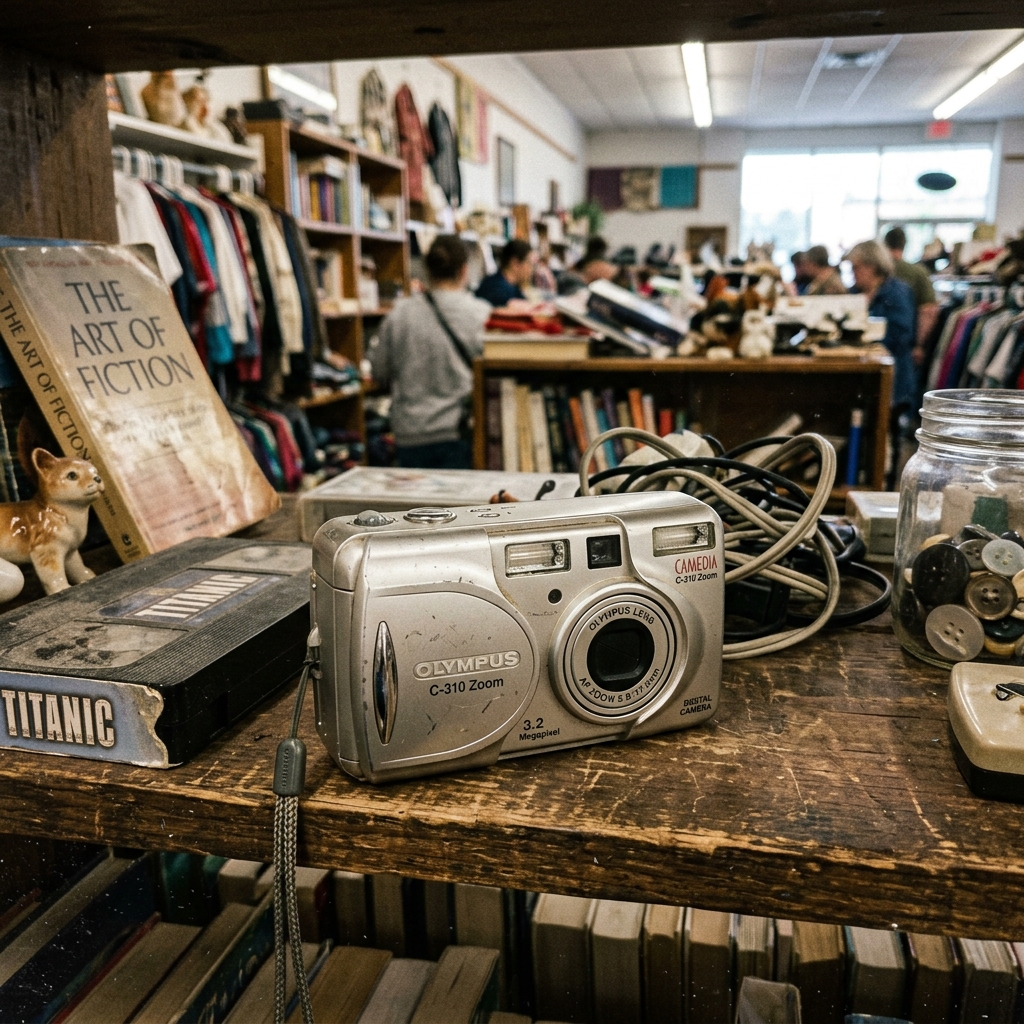
- Olympus Camedia: Some of the chunkier models (like the one in the photo) have a great retro look and sell consistently in the $40 - $60 range.
How to Test Digicams in the Thrift Store
Testing these is harder than film cameras because they usually rely on proprietary, long-dead lithium-ion batteries.
1. The AA Battery Exception
Always check the battery door first. If the camera takes standard AA batteries, you are in luck! PRO TIP: Always carry high-quality rechargeable AAs in your sourcing bag. Standard alkaline batteries often don't provide enough initial voltage to power up an old camera with a stuck lens. 📦 Buy Panasonic Eneloop Pro Rechargeable AA Batteries on Amazon
2. Testing Proprietary Batteries
If it takes a proprietary battery (like a Canon NB-2L), check if the battery is still inside. If it is, press the power button. 90% of the time it will be dead. If you buy a lot of cameras, it is highly recommended to buy a "Universal Battery Charger" with adjustable pins. You can bring this to the thrift store, plug it into a wall outlet, and give the dead battery a 5-minute juice charge just to see if the camera turns on and the lens extends. 📦 Buy Universal Adjustable Camera Battery Charger on Amazon
3. Common Points of Failure
- Lens Error: This is the most common death sentence for a Digicam. The camera turns on, but the lens groans and refuses to extend, or extends and immediately retracts, displaying "Lens Error." Do not buy these.
- Dead Screen: The camera powers on and takes photos, but the rear LCD screen is black or heavily cracked.
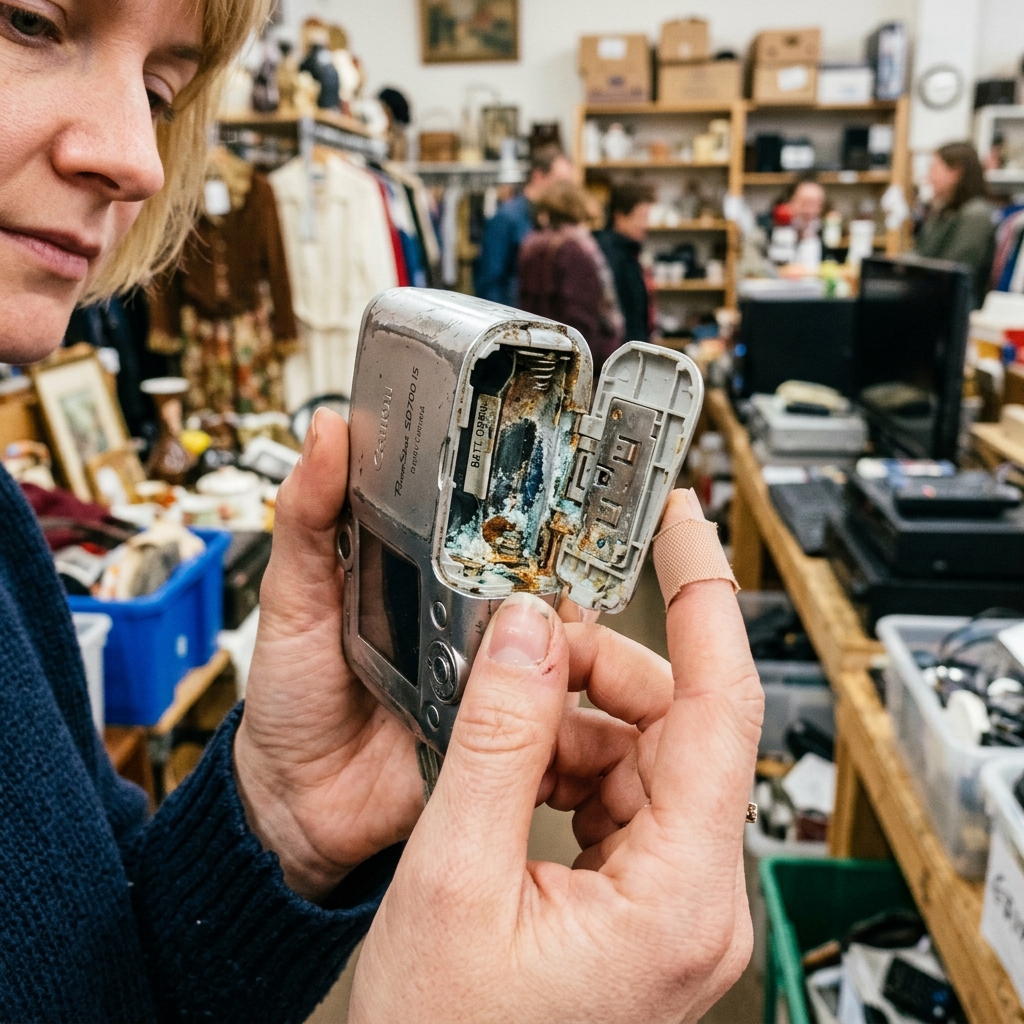
- Corrosion: Just like film cameras, check the battery compartment for blue/green acid.
Adding Value: The "Ready to Shoot" Bundle
The biggest friction point for Gen Z buyers is figuring out how to get the photos off a 20-year-old SD card and onto their iPhone. If you solve this problem for them, you can charge a massive premium.
The Strategy: Do not just sell the camera. Sell a "Ready to Shoot" bundle.
- Include the camera and a working battery/charger.
- Include a cheap, low-capacity SD Card (2GB or 4GB). Note: Old cameras cannot read modern 64GB+ SDXC cards. You must use old, low-capacity cards.
- Include an SD Card Reader for iPhone/Android. This is the secret weapon. If your listing says "Includes iPhone adapter to transfer photos instantly!", it will sell twice as fast as the competition. 📦 Buy Lightning to SD Card Reader Adapters on Amazon (Multi-Pack)
Pricing and Listing
- Title: Must include "Y2K", "Digicam", "Vintage Digital Camera", and "Tested".
- Example:
Canon PowerShot G9 Vintage Y2K Digicam - Tested & Working - Includes Charger & iPhone Adapter - Photos: Show the camera turned ON with the LCD screen illuminated. Take a photo of the lens fully extended.
By leaning into the Y2K trend and solving the photo-transfer problem with a cheap adapter, you can turn $5 thrift store electronics into highly profitable, fast-moving inventory.