The Ultimate Guide to Reselling Vintage Concert T-Shirts: From Authenticity to Profits

The world of vintage concert t-shirts is a vibrant, passionate, and incredibly lucrative niche in the e-commerce landscape. What might look like an old, faded t-shirt to some is a piece of wearable history, a cultural artifact, and a highly sought-after collectible to others. From iconic rock bands to obscure punk acts, hip-hop pioneers to grunge legends, vintage band tees tell a story and carry a hefty price tag if you know what to look for.
As an expert e-commerce reseller and SEO copywriter, I'm here to guide you through the intricate art of identifying, authenticating, pricing, and ultimately profiting from these timeless garments. This comprehensive guide will equip you with the knowledge to navigate the market confidently and turn your passion for music history into a thriving resale business.
The Allure and Lucrative World of Vintage Concert T-Shirts
Vintage concert t-shirts are more than just clothing; they are relics of music history, capturing moments in time, specific tours, and iconic album eras. Their value stems from a blend of nostalgia, rarity, cultural significance, and often, superior quality compared to modern counterparts. Understanding this underlying appeal is the first step to becoming a successful vintage tee reseller. The market is robust, with collectors and fashion enthusiasts constantly seeking unique pieces to add to their wardrobes or collections.
Identifying Authentic Items and Valuable Variations
Authentication is paramount when dealing with vintage concert t-shirts. The market is unfortunately rife with modern reproductions attempting to pass as genuine vintage. Knowing the tell-tale signs of authenticity is your most powerful tool.
Decoding the Tag and Construction
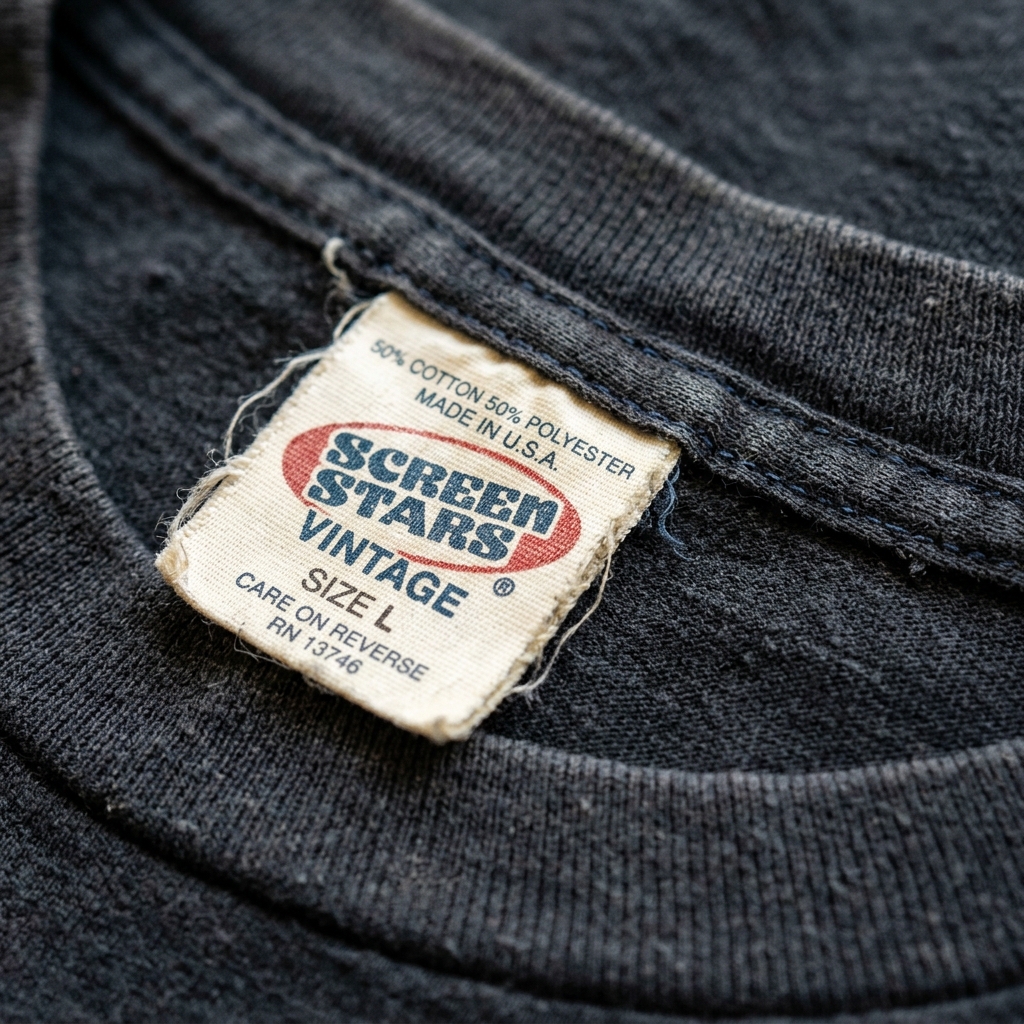
The tag is often the first clue to a shirt's age and authenticity. While not foolproof, it offers significant insights:
- Single Stitch vs. Double Stitch: This is a cornerstone of vintage tee authentication.
- Single Stitch: Tees produced roughly before the mid-1990s typically feature a single line of stitching on the sleeves and bottom hem. This is a strong indicator of genuine vintage, especially for shirts from the 70s and 80s.
- Double Stitch: By the mid-90s and certainly by the late 90s, double-stitch construction became standard. While some 90s single-stitch tees exist, double-stitch generally pushes an item closer to modern reproduction territory unless other factors strongly suggest authenticity.
- Brand Tags: Certain brands were prevalent during specific eras. Recognizing these tags helps date a shirt:
- 70s-80s: Hanes Beefy-T, Screen Stars, Fruit of the Loom (often with a red bar or "Best" tag), Sportswear.
- Late 80s-90s: Brockum, Giant, Anvil, Winterland, Tee Jays, All Sport, Acme.
- Y2K (Early 2000s): Gildan, Alstyle, Delta, AAA (Triple-A).
- Pay attention to the specific font, graphics, and country of origin on the tag. "Made in USA" was common for older tees, with production shifting overseas later.
- Tubular Knit: Many older t-shirts (especially 70s-80s) were made using a tubular knit construction, meaning they lack side seams. This is another strong indicator of age and can add to value.
Graphics, Print Quality, and Copyright Dates
The visual elements are critical for both authenticity and value.
- Screen Print vs. Modern Prints: Authentic vintage tees almost exclusively used screen printing. The ink often feels slightly raised and sometimes shows natural cracking over time. Modern reproductions might use direct-to-garment (DTG) printing, which feels flatter and integrates more into the fabric.
- Copyright Dates: Look for a small copyright symbol (©) followed by a year, typically near the bottom of the graphic or within the tour art. This date should ideally correspond to the known release year of the album or the tour year. Discrepancies (e.g., a 1985 tour tee with a 1995 copyright date) often indicate a reprint.
- Artwork Specifics: Research the specific tour or album artwork. Authentic vintage tees will feature accurate art for that era. Be wary of generic band logos without specific tour details unless the rarity justifies it.
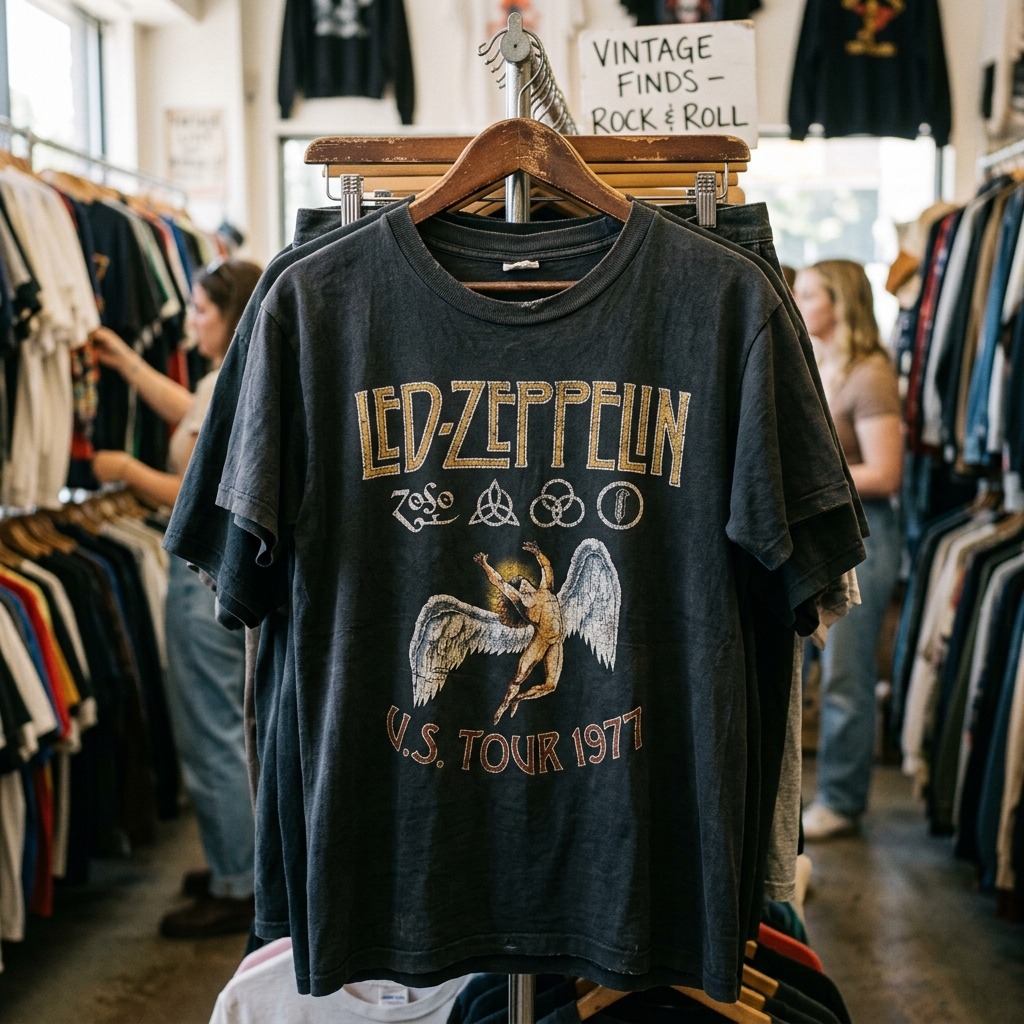
- Print Quality and Fading: Authentic vintage prints often show natural, even fading and cracking due to age and wear. This isn't a flaw; it's a desirable characteristic. Reproductions might attempt to mimic this, but it often looks artificial or forced.
Fabric Feel and Construction
The tactile experience of a vintage tee is unique.
- Softness and Thinness: Older cotton blends (often 50/50 poly-cotton or 100% cotton) tend to be much softer, thinner, and more worn-in than rigid modern cotton.
- Collar Ribbing: Examine the collar; older tees often have a tighter, more substantial ribbed collar compared to some modern tees.
Key Value Indicators
Beyond authenticity, certain characteristics significantly boost a tee's resale value:
- Band Popularity & Rarity: Iconic bands (Metallica, Led Zeppelin, Pink Floyd, Nirvana, Iron Maiden) always command high prices, but truly rare shirts from niche bands can also be incredibly valuable.
- Specific Tours/Albums: Tees from highly sought-after tours (e.g., Metallica's Damage, Inc., Nirvana's In Utero) or album releases fetch premium prices.
- Artwork: Unique, visually striking, or controversial artwork can increase value. Full back graphics with tour dates are often more desirable.
- Size: Larger sizes (L, XL, XXL, XXXL) almost always sell for more. The vintage market is often dominated by smaller sizes, so larger ones are rarer.
- Condition: While some wear is expected (and even desired), excellent condition with minimal flaws will always maximize value.
Checking Condition and Common Flaws
Accurately describing the condition of a vintage concert t-shirt is crucial for managing buyer expectations and preventing returns. Be brutally honest in your assessment.
The Good, The Bad, and The Perfectly Worn
Categorize your items:
- Pristine/Deadstock: Unworn, unwashed, with original tags (extremely rare for true vintage). Commands top dollar.
- Excellent: Very minor signs of wear, no significant flaws, vibrant graphics.
- Good: Moderate wear, some fading, minor cracking on graphics, potentially a few small pinholes (less than pencil eraser size), or a very faint stain. These are still highly desirable.
- Fair: Noticeable wear, significant fading, moderate cracking, several pinholes, small visible holes, or minor but visible staining. Can still sell well, especially for rare bands.
- Poor: Extensive damage, large holes, heavy staining. Only viable for extremely rare, grail-level pieces where collectors will accept any condition.
Common Flaws to Note and Describe
Always photograph and explicitly mention any flaws in your listing description.
- Pinholes and Small Holes: These are common around the collar, armpits, and bottom hem. Describe their size and location precisely (e.g., "small pinhole near left armpit").
- Stains: Armpit discoloration (pitting), food stains, paint marks. Describe their visibility and size (e.g., "faint yellowing in armpit area," "small dime-sized stain on lower front"). Do not attempt to hide them.
- Fading: Even, consistent fading often enhances a vintage tee's appeal. Uneven fading should be noted.
- Cracking on Graphics: Natural aging of screen print. Distinguish between natural, desirable cracking and excessive, distracting cracking.
- Loose Threads/Seams: Check hems, collar, and arm seams for any loose stitching.
- Pilling: Small fabric balls, common with wear.
- Measurements are Key: Due to inconsistent vintage sizing, always provide exact measurements:
- Pit-to-Pit (P2P): Lay the shirt flat, measure across the chest from armpit seam to armpit seam.
- Length: Measure from the top of the collar (or highest point of the shoulder seam) to the bottom hem.
Pricing Strategies: Maximizing Your Return
Pricing is an art that blends research, market understanding, and a dash of intuition. Overpricing deters buyers; underpricing leaves money on the table.
The Power of eBay Sold Comps
Your primary tool for pricing will be eBay's "Sold Listings."
- How to Search: Go to eBay, search for your item (e.g., "vintage Metallica tour t-shirt XL 1991"). On the left-hand sidebar, scroll down and check the box for "Sold Items" under "Show Only."
- Analyze Trends: Don't just look at one sale. Scroll through multiple sold listings. What condition were they in? What size? What did they ultimately sell for (auction or "Best Offer" accepted price)? Look for patterns over the last 60-90 days.
- Identify Outliers: Be wary of exceptionally high or low sales. A single high sale might be an anomaly. A low sale might be due to poor listing, bad timing, or undisclosed flaws. Focus on the average range for similar items in comparable condition and size.
- Grailed & Other Platforms: While eBay is king for sold comps, Grailed is excellent for seeing current asking prices for high-end vintage. Other specialized forums and Facebook groups can also provide insights into specific item values.
Current Market Value & Rarity Assessment
- Band/Artist Demand: Is the band currently popular or having a resurgence? Is there a documentary or movie featuring them? These can drive demand.
- Year & Tour Significance: Some years or tours are more iconic or simply rarer.
- Condition vs. Price: A rarer tee in fair condition might still fetch more than a common tee in excellent condition.
- The "Hype" Factor: Sometimes, certain designs or eras get "hyped" by celebrities or fashion influencers, driving prices dramatically. Stay current with trends.
Setting Your Price
- Anchor Pricing: For "Buy It Now" listings, it's often wise to price slightly above your desired minimum and include a "Best Offer" option. This allows for negotiation while signaling your perceived value.
- Auction vs. Buy It Now (BIN):
- Auction: Best for extremely rare, highly desirable items that you anticipate a bidding war for. Start the auction at a reasonable opening bid to attract interest.
- Buy It Now: Ideal for most other vintage tees. Offers stability, and with "Best Offer," allows for negotiation.
- Consider Your Costs: Factor in your sourcing cost, cleaning supplies, listing fees (eBay, Grailed take a percentage), payment processing fees (PayPal, managed payments), and shipping supplies.
Best Platforms to Sell and Shipping Tips
Choosing the right platform and ensuring safe, efficient shipping are the final steps to successful resale.
Choosing Your Marketplace
Each platform caters to a slightly different audience:
- eBay: The undisputed giant for reach. Best for all price points, especially for unique items where global exposure helps find the right buyer. Offers both auction and BIN.
- Grailed: A premium marketplace for men's fashion, streetwear, and high-end vintage. Ideal for very rare, collectible, and expensive vintage band tees ($100+). Buyers here are typically knowledgeable and willing to pay for quality.
- Poshmark: A social commerce platform, strong for general fashion. Good for mid-range vintage tees ($20-$100) and building a community following.
- Etsy: Known for handmade and curated vintage items. If you have a well-branded vintage shop, this can be a good avenue, especially for unique designs.
- Mercari: Similar to Poshmark, good for smaller items, typically lower price points.
- Specialized Facebook Groups: Many private Facebook groups exist specifically for vintage tee collectors. These can be excellent for direct sales, especially for niche genres or ultra-rare items, avoiding platform fees (though you'll need to handle payment and shipping directly).
Crafting the Perfect Listing
No matter the platform, a strong listing is key:
- Catchy & Keyword-Rich Title: Include the band, tour, year, size, and "vintage." (e.g., "Vintage 1991 Metallica 'Wherever I May Roam' Tour T-Shirt XL Single Stitch").
- Detailed Description:
- Measurements: Always provide Pit-to-Pit and Length.
- Tag Information: Brand, size on tag, country of origin, single/double stitch details.
- Condition Report: Be transparent about any flaws (pinholes, stains, fading) and show them in photos.
- Authenticity Details: Mention copyright dates, tubular knit, etc.
- Keywords: Use relevant keywords in your description (e.g., "heavy metal," "rock and roll," "retro," "band tee," "concert shirt").
- High-Quality Photos:
- Lighting: Use natural, bright light.
- Angles: Front, back, tag, close-ups of graphics, close-ups of any flaws, and measurements.
- Presentation: Flat lay or hanger shots are both effective. Consider a modeling shot if appropriate.
Secure Shipping for Valuable Tees
Protect your valuable items during transit.
- Clean & Fold Neatly: Ensure the shirt is clean, free of odors, and folded carefully.
- Inner Protection: Place the folded shirt inside a clear poly bag. This adds an extra layer of protection against moisture, dust, and minor damage during transit.
- Outer Packaging: For most t-shirts, a sturdy poly mailer is sufficient and cost-effective. 📦 Buy Shipping Poly Mailers on Amazon Here. For higher-value items (over $100-$200), consider using a small box with tissue paper for added rigidity and protection.
- Weight: T-shirts are lightweight, usually under 1 lb. Shipments typically qualify for USPS First Class Package (for items under 1lb) or Priority Mail.
- Tracking & Insurance: Always use a shipping service that provides tracking. For items over $50-$100, consider purchasing additional shipping insurance. This protects both you and the buyer in case of loss or damage.
- International Shipping: Be prepared for customs forms. Use the correct Harmonized System (HS) code for apparel. Clearly declare the item's value for customs purposes.
The journey into reselling vintage concert t-shirts is an exciting one, blending a love for music history with sharp business acumen. By diligently authenticating your finds, accurately assessing their condition, strategically pricing them based on market data, and presenting them professionally, you can build a successful and rewarding e-commerce venture. Happy hunting, and may your inventory be filled with single-stitch treasures!